Smart Mattress Recycling Reshaping Local Solid Waste Management
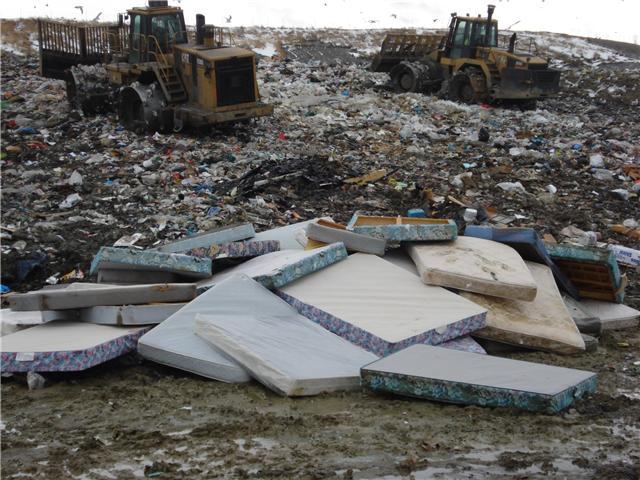
For decades, bulky waste—especially mattresses and box springs—has presented a major operational headache for municipal solid waste departments. They consume immense cubic volume in transfer trailers, exacerbate wear-and-tear on equipment, and rapidly deplete precious landfill capacity.
At Springback Recycling, our mission extends beyond tearing down mattresses to recover steel, foam, wood, and fiber. We partner with local governments, solid waste departments, and community leaders to build sustainable, efficient, and cost-neutral diversion programs that deliver real operational relief.
Recently, we sat down to reflect on how a county-wide transition to structured mattress recycling impacts day-to-day operations, budget allocation, and long-term sustainability goals. Here is a look behind the scenes at how strategic diversion changes the game for residents, staff, and public infrastructure.
The Economics of Diversion: Landfill Hauling vs. Recycling
A common misconception among local decision-makers is that landfilling bulky items is inherently cheaper than recycling them. However, when you calculate the full operational cost of hauling bulky mattresses, the math tells a very different story.
Consider the real internal costs of municipal waste transport:
-
Operating Cost per Truck: Roughly $225 per hour (factoring in operator labor, maintenance, routine repairs, fuel, and vehicle depreciation).
-
Turnaround Time: An average of 2.25 hours to load, transport, unload, and return from a regional disposal facility.
-
Capacity Constraints: A standard load fits approximately 32 mattresses and box springs, requiring around 12 loads per week to keep up with volume.
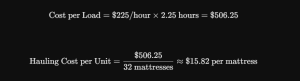
Even in scenarios where municipal residential tipping fees are minimal or waived, a county is still paying a conservative $16 per mattress just to haul it to a landfill. When accounting for traffic congestion, extended staging delays, and seasonal volume spikes, that cost rises quickly. By redirecting those items into a dedicated recycling program, municipalities immediately unlock significant cost savings while recovering high-value materials.
Operational Relief and Community Impact
Diverting mattresses isn’t just about saving money on fuel and fleet depreciation—it’s about regaining lost time.
Every hour a crew spends loading and hauling bulky, low-density materials to a landfill is an hour taken away from critical municipal services. Transitioning to a structured recycling workflow buys essential breathing room for solid waste personnel. It allows departments to:
-
Better manage and reduce employee overtime.
-
Keep up with fleet maintenance and vehicle cleanliness.
-
Complete essential safety and operational training.
-
Maintain routine collection schedules in rapidly growing communities.
Preserving Landfill Capacity
To visualize the environmental relief: 20,000 mattresses equal approximately 700,000 cubic feet of space. That is equivalent to filling an entire commercial grocery store from floor to ceiling with waste. Keeping that volume out of local landfills preserves critical capacity, reduces long-term municipal liability, and builds public trust in local environmental stewardship.
Q&A: Navigating the Transition to Mattress Recycling
Transitioning a community or municipality to a formal recycling program brings practical questions from leadership, site attendants, and residents. Below are five key answers based on real-world implementation experience.
1. How do you handle the transition for site attendants and residents who are used to free disposal?
Transitioning from “free disposal” to a structured recycling fee requires clear communication and thorough staff training. Prior to launch, all site attendants should receive training on workflow management, customer service, and assisting residents with payment and trailer loading. Department leaders can support onsite operations during launch days to ensure smooth execution. Crucially, when residents understand that their $25 fee supports full material recovery and recycling rather than simply burying waste in a pit, acceptance increases significantly.
2. Does implementing a recycling fee at drop-off sites increase illegal dumping?
In practice, structured recycling programs have not shown a measurable increase in illegal dumping. Clear community outreach explaining where the material goes, combined with accessible drop-off locations, helps maintain community compliance. The majority of residents appreciate having a responsible, eco-friendly outlet for bulky household items.
3. How does mattress recycling compare financially to traditional landfilling?
When factoring in complete truck operational costs ($225/hour including labor, fuel, and depreciation) and round-trip transport times (averaging 2.25 hours per load), hauling mattresses to a landfill costs roughly $16 per unit in transport alone. In just two months of collecting around 1,900 mattresses, a county can avoid approximately $30,000 in direct hauling costs while diverting tons of reusable materials away from disposal sites.
4. What tangible operational benefits does the solid waste department see day-to-day?
Eliminating mattress hauling frees up valuable labor hours and equipment capacity. Instead of tying up staff with bulky transport, departments gain the flexibility needed to curb overtime, perform routine vehicle maintenance, conduct employee training, and keep up with general waste demands driven by rapid regional population growth.
5. How does partnering with Springback Recycling support broader community goals?
Partnering with Springback Recycling shifts the financial burden directly to program users while recovering steel, wood, foam, and cotton for reuse. Beyond diverting hundreds of thousands of cubic feet of waste, it strengthens municipal credibility, demonstrates proactive environmental leadership, and creates meaningful jobs within the recycling economy.
Partner with Springback Recycling
Building a sustainable future requires smarter solutions for difficult waste streams. Springback Recycling helps cities, counties, and solid waste districts convert operational challenges into measurable environmental success stories.
Ready to optimize your waste operations and divert bulky items from your local landfill? Contact Springback Recycling today to discuss custom municipal solutions and program implementations.
