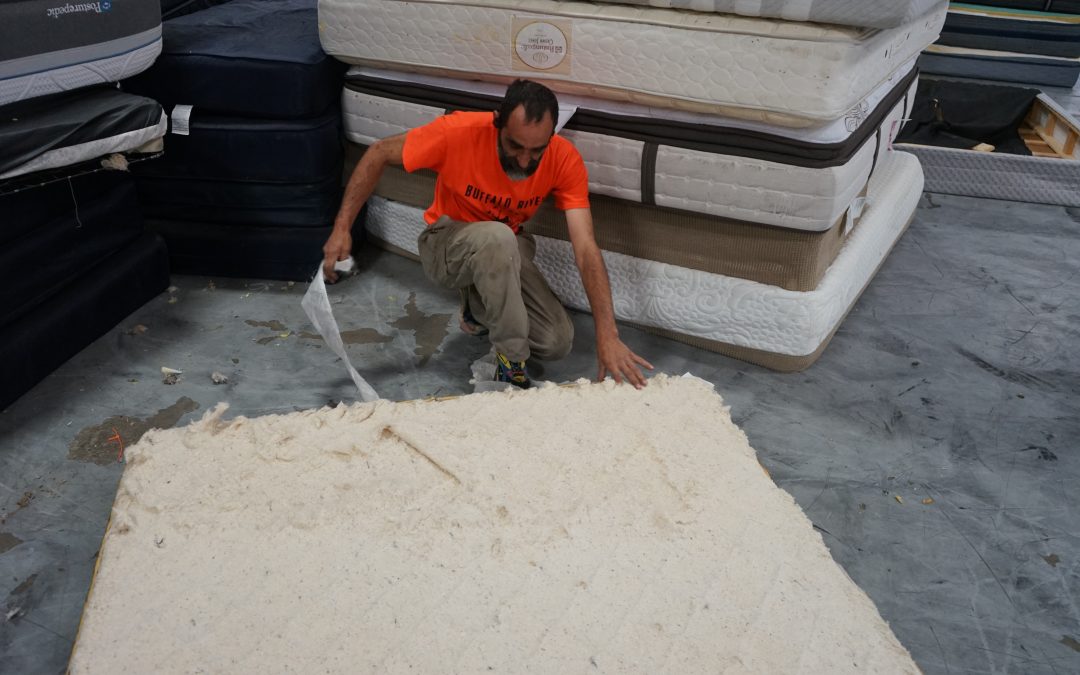
Polyurethane (PU) foam is one of the most ubiquitous materials in modern life. From the mattresses we sleep on every night to the cushions in our living room sofas and the ergonomic seats in our vehicles, PU foam provides the essential comfort, resilience, and support we rely on daily. Yet behind this everyday comfort lies a staggering environmental challenge: every single year, billions of pounds of post-consumer polyurethane foam are discarded globally, with the vast majority heading straight into landfills or waste incinerators.
For years, mechanical recycling has been the primary attempt to address this waste stream. While shredding post-consumer foam into “bonded foam” or converting it into carpet underlayment diverts material from the dump, it is fundamentally a form of downcycling. Each pass through mechanical shredding degrades the structural integrity and quality of the polymer matrix, severely limiting how many times the material can be reused. Eventually, even carpet cushion reaches the end of its life cycle and ends up in a landfill.
Unlocking the Circular Economy Through Advanced Chemical Recycling
To break this linear “take-make-dispose” pattern, pioneering research at Vanderbilt University is turning away from basic mechanical shredding and moving toward chemical upcycling.
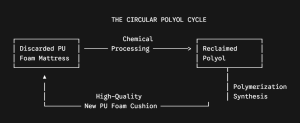
Rather than mechanically compressing discarded materials into lower-grade products, this innovative chemical process breaks down the complex polymer chains of post-consumer PU foam directly into their primary chemical building blocks—specifically, high-quality polyols.
Polyols are one of the foundational chemical components required to synthesize polyurethane. By reclaiming high-purity polyols directly from waste streams:
-
Manufacturers can replace virgin, petroleum-derived polyols in new product formulations.
-
The material maintains its high-performance mechanical properties, allowing it to be recycled repeatedly without degradation.
-
Dependence on crude oil extraction is drastically minimized, slashing the carbon footprint of domestic manufacturing.
Real-World Validation: The Vanderbilt & Springback Recycling Partnership
Laboratory innovations mean little if they cannot survive the chaotic realities of real-world waste management. Discarded mattresses do not contain uniform, pristine foam; they contain a complex blend of varying densities, flame retardants, memory foam formulations, and age-related degradation.
To bridge the gap between academic chemical engineering and industrial execution, researchers at Vanderbilt University are partnering directly with Springback Recycling.
Led by Jamie, PhD Candidate in the Department of Chemical and Biomolecular Engineering at Vanderbilt University, the research team utilizes real post-consumer PU foam harvested directly by Springback from municipal waste streams and institutional collection. Testing this chemical upcycling process on authentic, varied feedstocks ensures that the technology can handle the diverse formulations found in actual consumer goods.
Through this collaborative partnership between Vanderbilt engineers and Springback’s industrial recycling infrastructure, cutting-edge chemical science meets real-world scale—paving the way for a truly circular, economically viable future for the global foam industry.
Follow us on social media here! Instagram Facebook LinkedIN
To visit our Donations page, click here.
For a list of all recycling options, visit click here.
For commercial recycling opportunities and information, click here.